A workshop is a cultural resource
Australian Print Workshop has supported contemporary printmaking since 1981. Based in Fitzroy, it combines specialist facilities and printers with collaborative projects, exhibitions, education and artist support. Its role helps explain why a workshop can matter to an art community beyond the individual objects it produces.
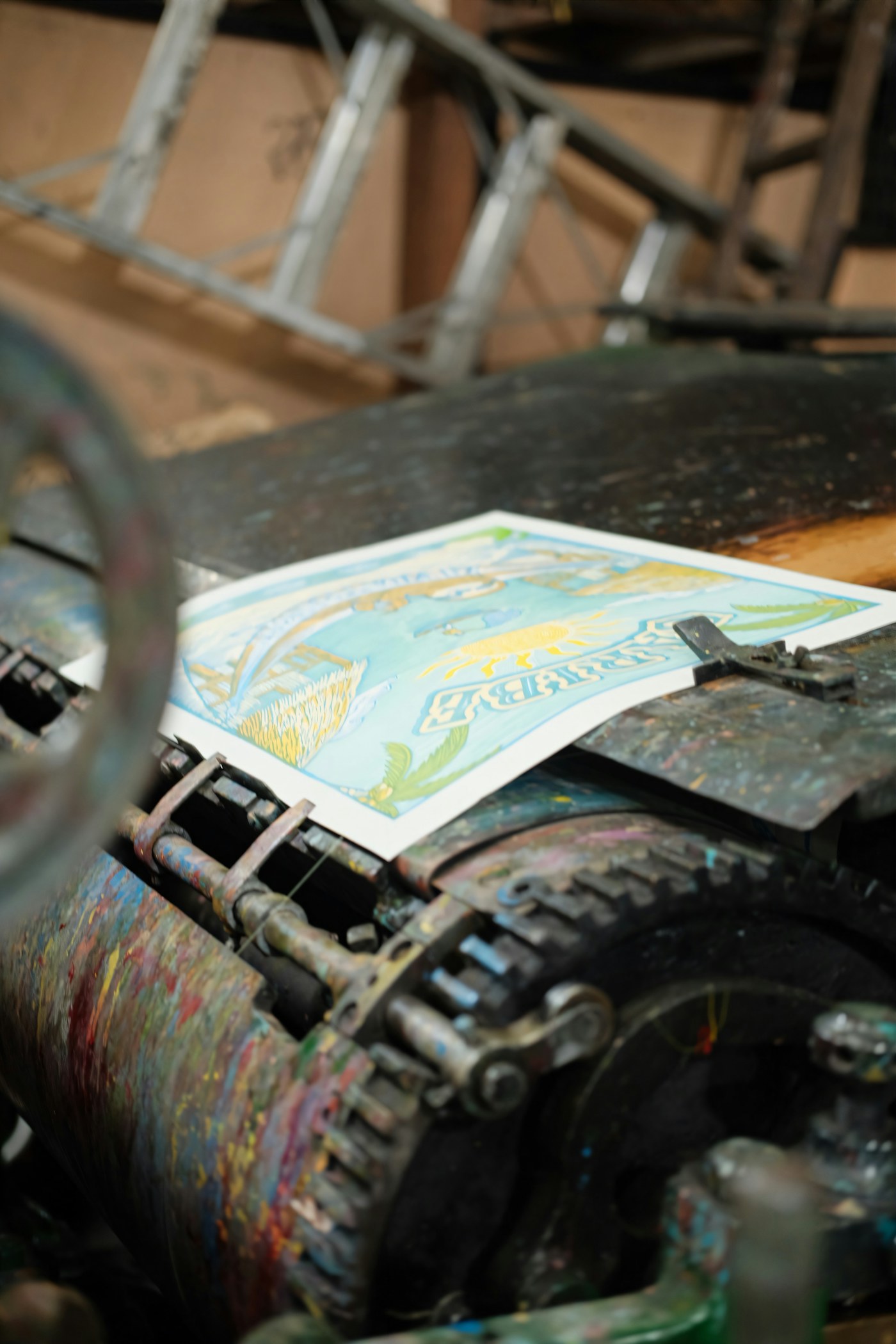
A press is a substantial tool, but access to equipment is only one part of the picture. Technical knowledge, discussion and the opportunity to test an idea can be just as significant. The finished work often makes that network of decisions difficult to see.
Ask how the image came into being
When looking at a print, start with the medium identified in the label or catalogue. Then ask what that process allows the artist to do. Does the work depend on a line, a layered field of colour, a repeated mark or a particular relationship with the paper?
APW describes collaborative printing as central to its program. That is a reason to read the production credits as carefully as the artist’s name. It does not diminish the artist’s authorship; it makes the material and technical collaboration more visible.
Use the edition details as information
Before buying a print, ask the gallery to explain the edition, any proofs, the paper, the printing process and the documentation supplied with the work. These details help you understand the object you are considering. They are more useful than assuming that every numbered image was made in the same way.
Look at the work in person where possible. A screen can show the composition while obscuring scale, surface and the relationship between ink and paper. Ask about framing and care before choosing a location in direct sunlight or a damp room.
Match a visit to your interest
A gallery visit, guided tour and practical course offer different levels of involvement. Check APW’s current program and eligibility requirements rather than assuming the working studio is available for an informal drop-in.
If you are new to printmaking, arrive with one process question and one visual question. If you already make work, ask how a particular technique might serve the idea rather than choosing it only for its appearance. The workshop becomes more interesting when it is understood as a place where decisions are made, tested and refined.