A pavilion can edit a view
A small building does not need to contain many functions to change how a place is perceived. Tadao Ando’s MPavilion uses enclosure and openings to make the surrounding garden something to look at deliberately.
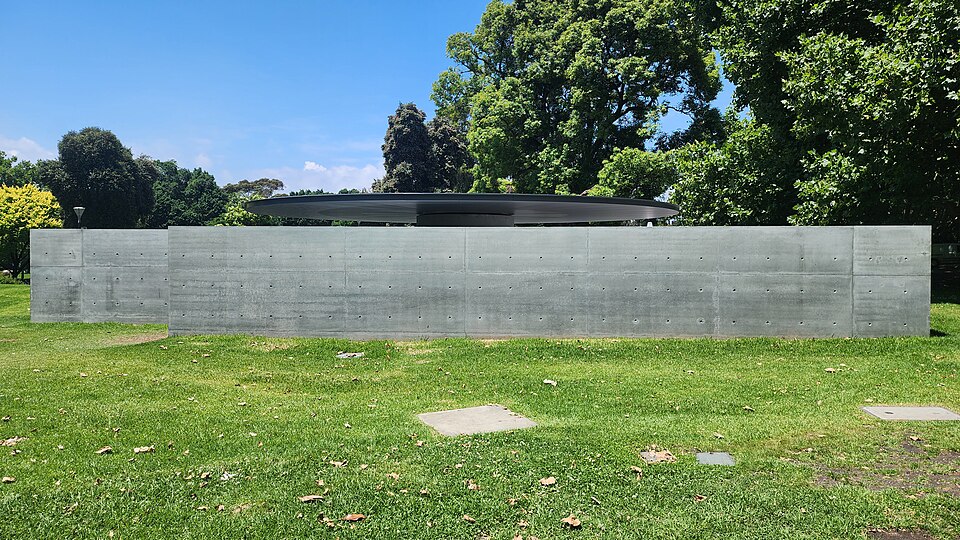
The MPavilion project information describes concrete walls, a circular aluminium canopy and a reflecting pool within the Queen Victoria Gardens setting. The geometry is simple enough to recognise quickly, but that simplicity leaves light, reflection and movement with a larger role in the experience.
Look at what the wall withholds
A wall can make a familiar landscape briefly disappear, then return it through a controlled opening. Instead of treating the opening as a missing piece of wall, consider the view it selects. How much sky, vegetation or surrounding activity is included?
The exterior photograph accompanying this article shows the contrast between the low concrete enclosure, the thin canopy and the trees beyond. It records a particular day, not a permanent lighting condition. Weather and season can change the relationship between those elements without changing the building.
Let reflections remain contingent
Water introduces a second, less stable image of the architecture and its surroundings. A reflection can be clear, broken or difficult to see depending on the conditions. That variability is part of what makes a restrained space worth returning to.
For photographs, decide whether you want to explain the building or study one effect. A wide view can show the relationship between enclosure and garden. A close study can concentrate on a reflection or the meeting of materials. Neither substitutes for the other, and neither should be described as the whole experience.
Plan for the pavilion’s actual access
Check MPavilion’s current visiting arrangements and program before travelling. Architecture in a public garden still has opening and event conditions; a photograph from a previous season does not establish present access.
Once there, allow a few minutes before reaching for the camera. Notice the direction of light and how other visitors move through the space. The useful lesson is one of selection: a limited set of materials and forms can make a changing environment more apparent, provided the visitor gives those changes time to register.